

Quest Take Three
Though Some Quests Are Better Known Than Others

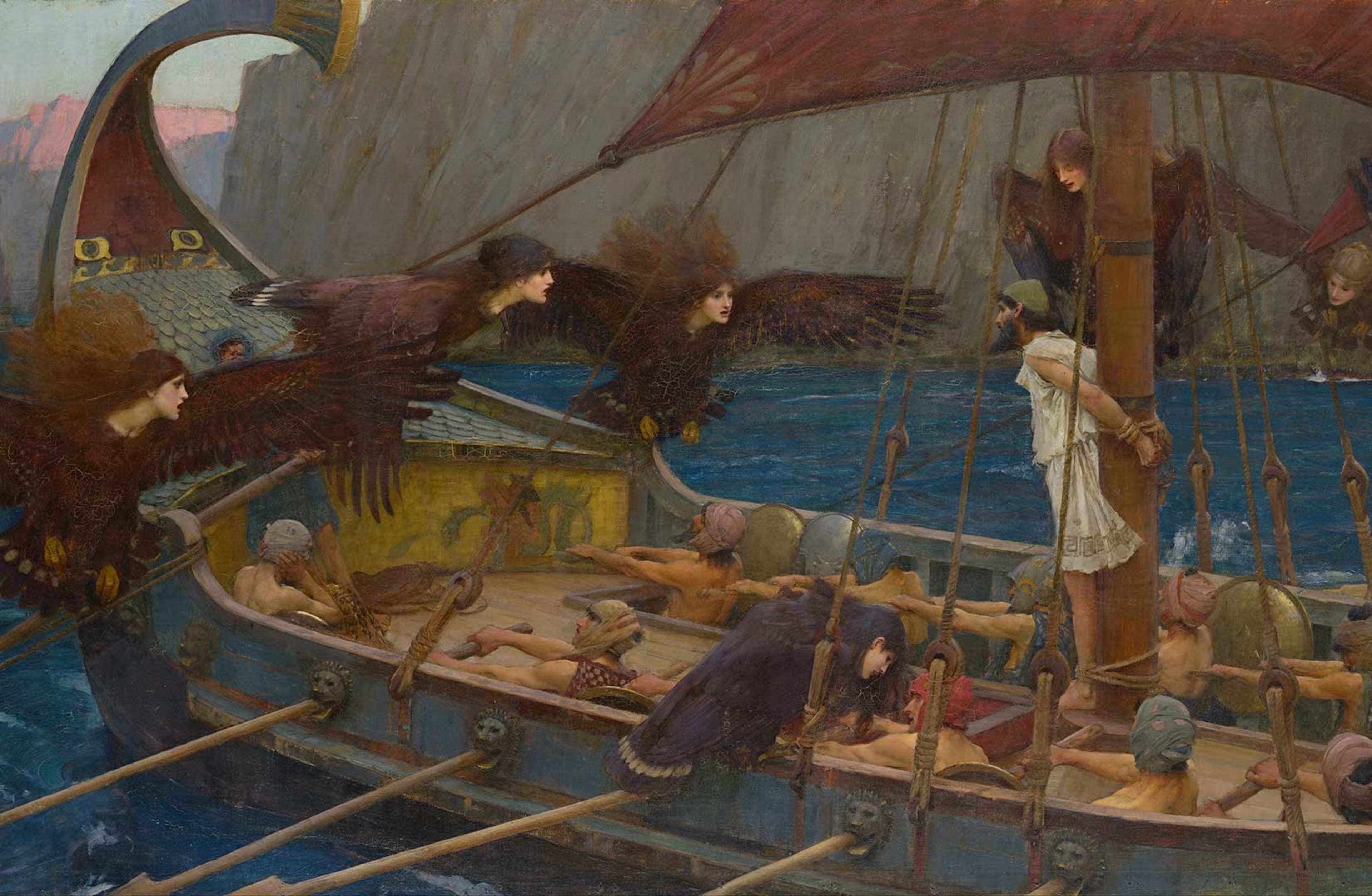
The quest is a literary form with a long history and one that continues today. It is typically a journey toward a specific goal, and the genre requires great exertion on the part of the hero, who must overcome obstacles, not the least of which is travel. The Odyssey and the Aeneid are quests, and so are Lord of the Rings and Star Wars.
Rarely, if ever, is the hero of the quest, who more or less has to be heroic, also the author of the story, presumably because the overcoming of obstacles is diminished in the eyes of the reader by the inevitable perception of horn tooting.
About a quarter century ago, which is quite short by quest standards, I set off on what can only be described as just such an endeavor, though unpleasant words descriptive of mental instability have also been used to describe it. About four years ago, I wrote the definitive (actually, the only) book on the subject.
After helping to build a court tennis court in Washington DC, I decided to see if I could play on every court in the world. The governing bodies of the game in England and the United States differ on the exact number with England saying 51 and the United States saying 48. My own list shows 58 but it includes several that are now closed and a temporary one that existed for a short time as a movie set.
Court tennis has a 700-to-1000-year history and is derived from countless ball games played in streets throughout Europe. It was somewhat standardized in the 1300s and became popular among the nobility, who built private courts, and the masses, who gambled on it. It could well have enabled the earliest “prop bets,” and it spawned tennis as we know it today.
The book - Around the World in 50 Courts - was published in 2022 and there has been one story about subsequent questing when a new court was built and played upon at a golf resort in Sand Valley, Wisconsin. Hence this story is “take three.”
The newest court on which this medieval forerunner of tennis is played is in Sydney Australia. I got to play on it in March, about a year after it opened.
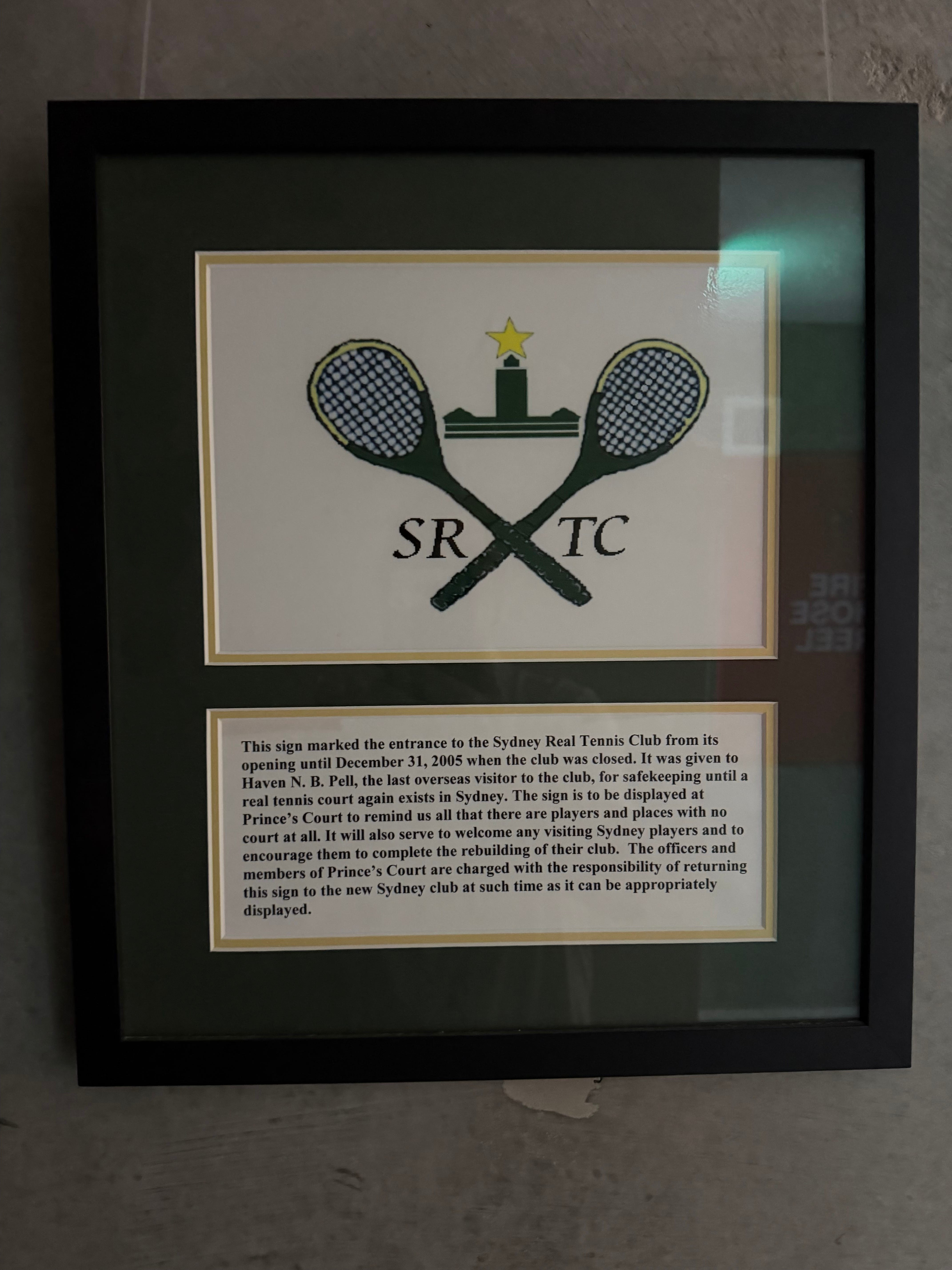
I have a 20-year relationship with court tennis in Sydney. In December 2005, I was the last overseas visitor to play on their old court, which closed a few days later. Had I not done so, the quest would have ended in failure, the book would never have been written or published, and the world would have ended in darkness. Essentially, given the setting, a fitting sequel to Nevil Shute’s “On the Beach.”
As the Sydney enthusiasts began developing plans for a new one, I tried to provide some help to Sav Cremona, Claire Cooper, Chris Cooper, James Willis, Michael Fitzgerald, Dick Friend, Jonathan Hamer and others who wanted to build a new one. Someone please provide the names of those I have omitted so I can bend the apologetic knee to them.
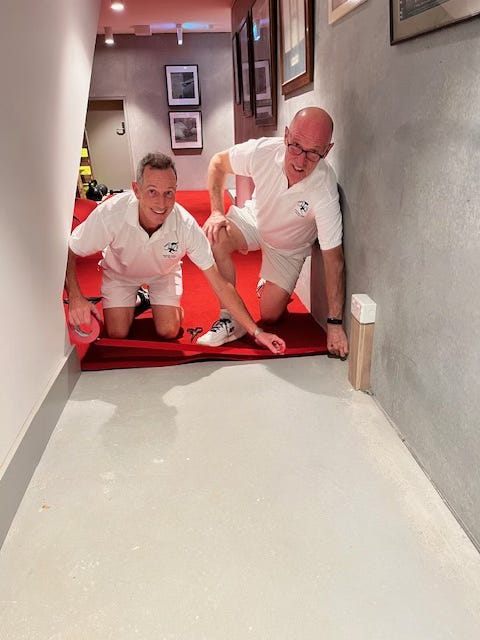
In the building of court tennis courts, there are more starts than finishes. They are not cheap and there is no hope of return on the required capital investment. Charity is the primary source of funds, though in Sydney, the State of New South Wales threw in a chunk of money.
Finding a venue is difficult because the game is so tiny that almost nobody knows about it. Obtaining planning permission is a larger obstacle in some countries than others. Sustaining a multiyear volunteer development effort requires either leadership or the debilitating fallback of doing everything yourself.
Just when the team thinks it has finished the job by opening the court, they discover that they have the daunting task of finding people to play and support the daily operating costs. A court tennis court begins as a co-op before it becomes a club.
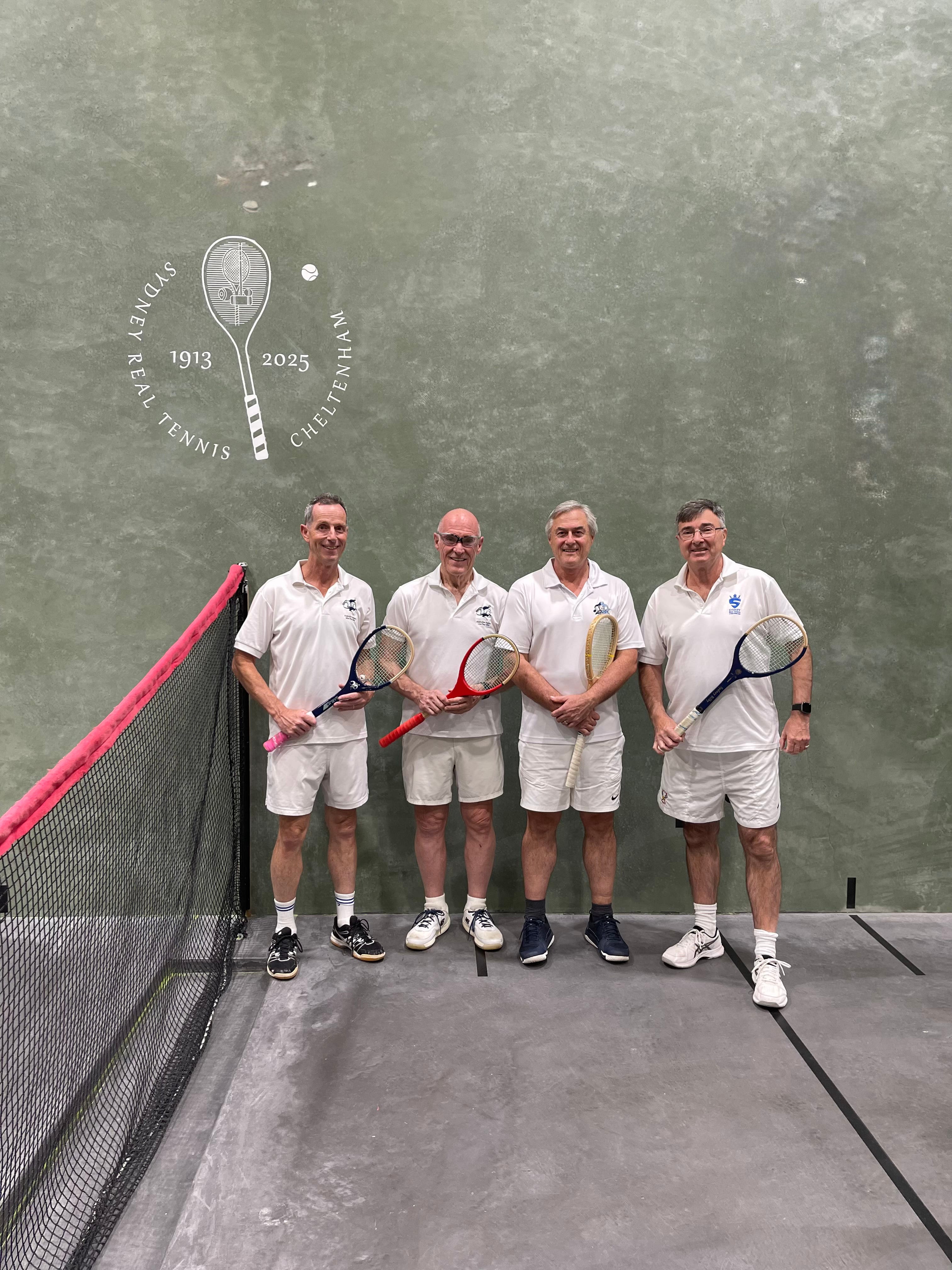
The Sydney Court, located at the Cheltenham Recreation Center, opened a year ago, but I knew I would be there last month for the over 80 world team championships, so I didn’t do the 22-hour roundtrip flights twice in a 12-month period.
The developers kindly invited me to join their doubles game for my first hit and thus was lifetime court, #58 achieved. The quest continues
Curiously, especially for non-questers, it is quite exciting to achieve another milestone in an ongoing effort. There is a sense of exhilaration that must also be felt by birders and mountaineers. However important, or in this case unimportant, it is to make the next milestone, the person doing so feels a sense of accomplishment in doing something that few others have done or tried to do.
Courts number 59, 60 and perhaps 61 are in various stages of coming to fruition. In Charleston, South Carolina, the building is under construction, and the right questions are being asked about the features of the court itself. It is set to open in late 2026 or early 2027. There are other projects at the talking stage in Delaware and in Melbourne, Australia. God willing and the creek don’t rise, I will play in all of them, perhaps at their openings. Something to look forward to.
Meanwhile, well done Sydney for being able to complete a court in a city where one had closed. That surely doesn’t make it easier. It is great to see how many new fans and players of and ancient and obscure game you have found in just a year.
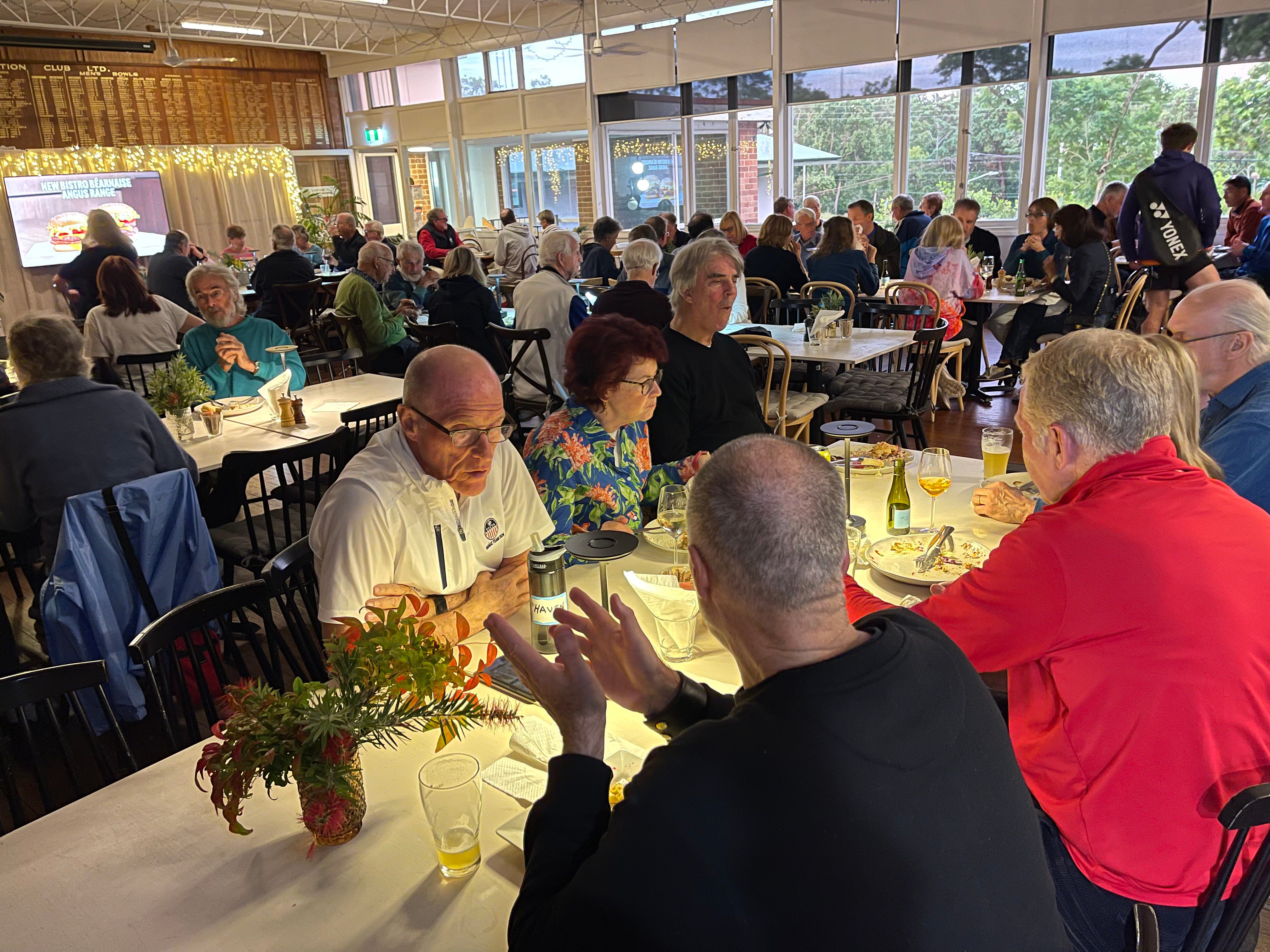
For the record, our 80-year-olds on the US team gave a good account of themselves, finishing second to a deserving Great Britain team after the third level of tiebreaker. A quest of another sort that succeeds, even if it doesn’t win.
As the trainer, with whom I began working as a mere pup of 60 shortly after my earlier visit to Sydney, reminds me, “just keep doing the things.”
Around the World in Fifty Courts (aka Quest Take One) drew first breath online. Each chapter was posted on my then website, the best available equivalent at the time to today's Substack. The "edit" from the online postings to the book itself was drawn largely from the corrections submitted in the comments. As far as I am concerned, thus ever shall it be. Today we have a second correction again on bended apologetic knee. Lindsey Jameson was also deserving of recognition as one of the leaders of the Sydney effort.
We have the first bending of the apologetic knee for omitted contributors to the Sydney court. Graeme Bradfield's donation earned him the naming of the court itself. Chris Ronaldson, a former World Champion and now Dean of the Professional Community donated countless hours making balls, stringing rackets and recruiting members while await the much delayed occupancy permit. Record corrected with the author's apologies.