

Reflections on the World Cup

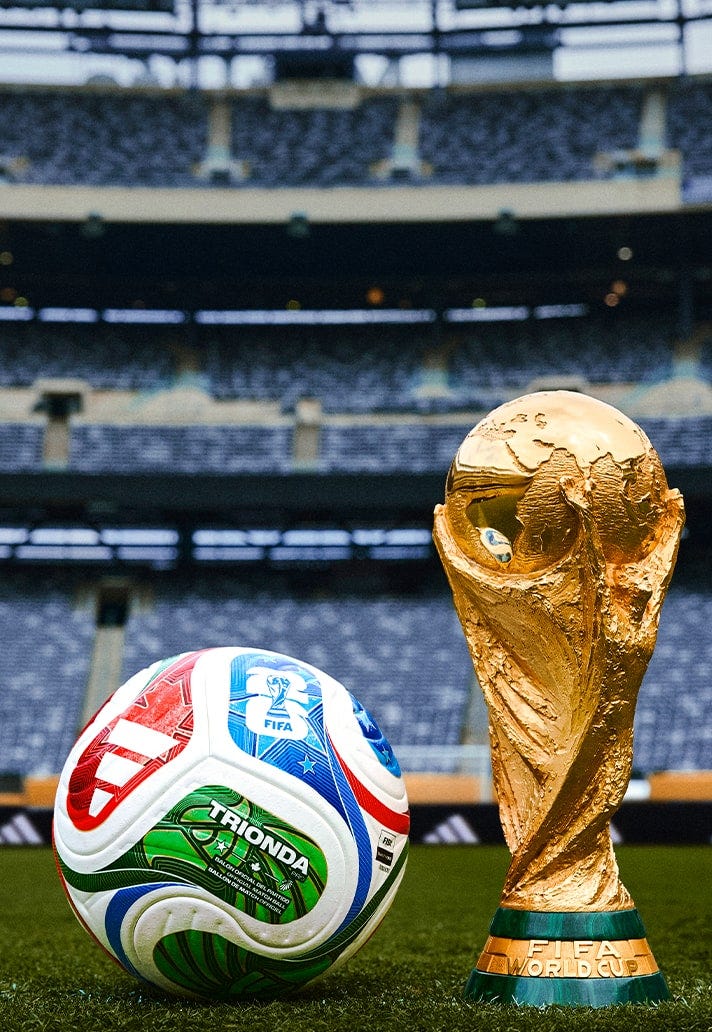
I am a big fan of the World Cup, a view that has been enhanced by the first 102 games of the quadrennial tournament that will come to an end this weekend. Since this is not a traditional sports story, it does not depend on which country wins either the final or the consolation.
I was fortunate to learn to play the game while at school abroad in the 1950s, and it served me well at boarding school and college in the 1960s. Like the rest of my athletic choices, I benefited from soccer’s lack of popularity in the United States at the time (and thus a lack of players better than me).
Athletic Life Lesson: the bigger the sport, the less likely I am to be good enough at it.
Measured by number of fans, soccer (3.5 billion) is, by a one-billion-person margin, the most popular game in the world. Interestingly cricket (2.5 billion) and field hockey (2 billion) (both popular in India) are ranked two and three in popularity, and neither of these have much following in the United States. American fans favor our kind of football, followed by basketball, with soccer in third place.
FIFA, the Fédération Internationale de Football Association, would like to change that and, to do so, it staged its quadrennial extravaganza in Canada, Mexico and the United States, but mostly in the United States.
Forty-eight countries played in 16 round robins, followed by six rounds of single elimination matches. The world’s top four (Argentina and Spain, finalists, and England and France, playing for third place) overcame both easy opponents and nail-biting challenges to get there.
Every game was televised by Fox and Telemundo. World class commentators brought the subtleties to less experienced American viewers. To my eye, a total triumph. In prior years, viewers and reporters often groused about low scoring games, pace of play, blatant fouls, and even more blatant diving by players who wanted fouls called against their opponents. All these things still happened, but the viewers and reporters appeared to have stopped grousing. They now seem to embrace the game as it is and as it is enjoyed elsewhere.
We Americans must have learned something in the last six weeks.
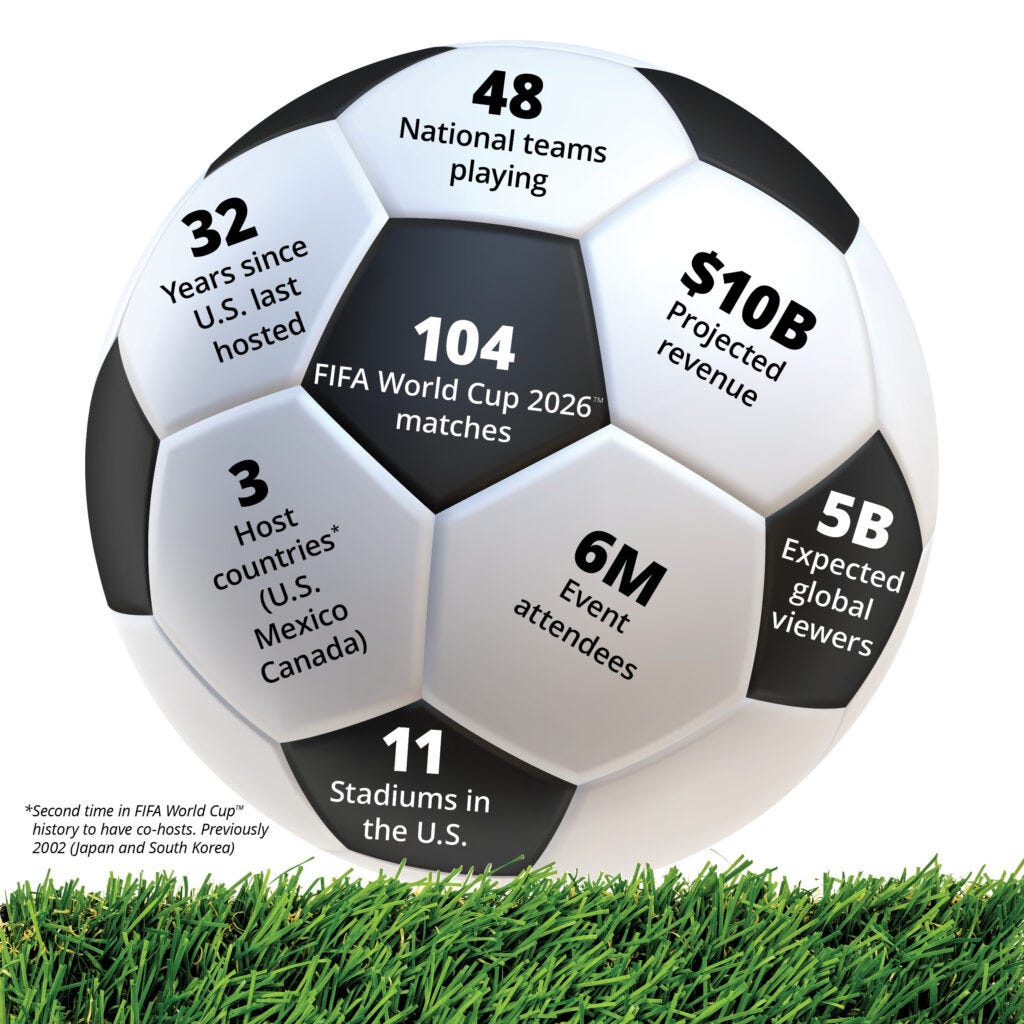
Was it flawless? No. How could anything with more than 100 games played in 16 venues in three countries be flawless?
To many eyes, the ticket prices seemed outrageous, but the seven or eight million people who bought them didn’t seem to think so. The market has spoken, with every game a sellout or nearly so. This experience will likely set a new level of ticket pricing for other sports as well.
More important was the feel-good effect. Americans watched our team and all the others. Many found the Cape Verde Islands on a map for the first time and found a place for their team in our hearts.
Want to sound like an expert? In soccer, the teams are always plural. England “are” not England “is.” And zero is nil, so 2-0 is “two-nil” not two-zero, two-nothing or two-love.
Our overseas visitors came away with a different view of America than they see in their newspapers and on their televisions. Who knew ranch dressing would prove to be a diplomatic coup?
The Tartan Army of Scots allegedly emptied all the beer kegs in Boston, a city that is not shy about its drinking skills. As a result of their popularity, a back-and-forth tourism effort is underway between Massachusetts and Scotland.
There is no future in trying to explain Erling Haaland, the 6’5” Norwegian scoring superstar. He is one-of-a-kind but he exemplified the Norwegian Row in which fans and players alike rowed the Norwegian long boat to victory. They did so on the field. They did so in the stands. And they also did so on the subway and on escalators. They have a big drum. Who doesn’t love a big drum?
How does public opinion about other countries – and about ours – not change when we see that people having fun are really pretty much the same, albeit sometimes uniquely imaginative?
The biggest flub was probably the President’s effort to interfere with the suspension of America’s top scorer for two yellow card penalties. The intervention clearly: embarrassed, FIFA, especially when a committee reversed the suspension; angered Belgium, our opponent in the game in which the suspension would apply; and adversely impacted the US team dynamic, perhaps even contributing to in a one-sided 4-1 loss. It is too much to expect of someone as notably selfish as Donald Trump to understand the concept of teamwork or, indeed, the concept of taste.
Throughout the years of planning, and in the six weeks of the tournament, FIFA had to be sure the leaders of the three host countries were on side or the whole thing could have gone off the rails. Unsurprisingly, one leader proved more difficult than the others. Think FIFA Peace Prize after the shameless lobbying for the Nobel version failed.
What will FIFA get out of this event?
First, there will be more American fans, which, at the very least, will increase the value of US television rights.
Second, there should be greater interest in US professional soccer, which is not yet on par with leagues in England, France, Germany, Spain or Italy.
Third, there should be more young players, as children decide to take up the already popular game in increasing numbers. They and their parents will become fans. And they will buy lots of Lamine Yamal jerseys to go along with the Messi ones they already have.
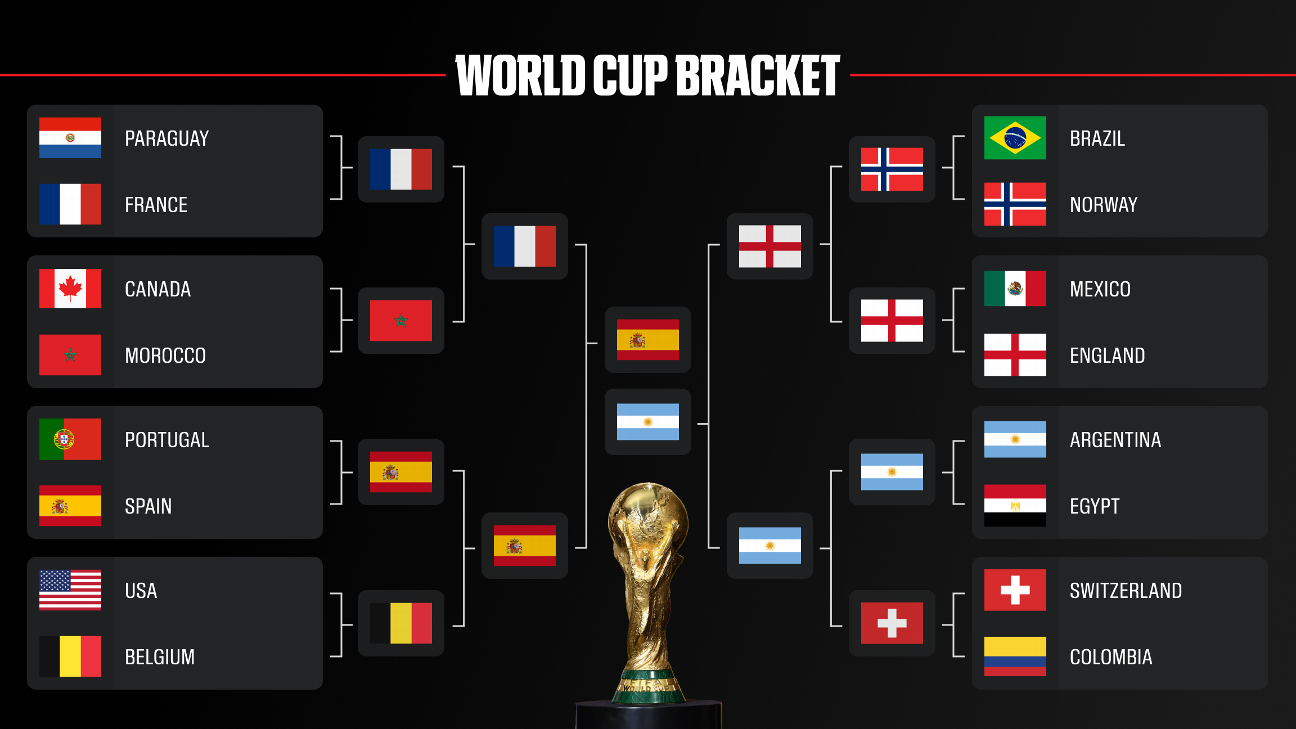
I am doubtful, however, that hosting this year’s World Cup will make the US men a better team. We currently rank in the mid-teens of the 211 soccer playing countries, so our loss to Belgium in the round of 16 was about as expected. Given our shorter history at the international level, a mid-teens ranking might well be viewed as a significant achievement.
Our women’s team is at the top level, but this is probably attributable to greater participation in women’s sports in America than in other countries. As others catch up, our ranking might drop.
The real problem for developing a truly top-level men’s team in the United States is described in detail in this story. I could not possibly say it better.
A big question around this World Cup is: Why is it so hard to develop a soccer superstar in the U.S.? Well, our pay-to-play system is a big part of it.
In Europe, clubs spend millions to develop young players. Governments invest, too, with the belief that youth sports are good for everyone and pay off.
In America, soccer costs a lot, too, but for the players and their families.
§ Anyone with a kid who loves playing soccer knows: If you want to get past a certain level of youth soccer in the U.S., you’re going to start paying through the nose. As The Athletic’s Henry Bushnell wrote: It can be tens of thousands of dollars by the time your kid is a teenager.
§ The result? Millions of talented kids simply will never have the access, money or privilege to rise to that level.
The U.S. system “is not a youth-centered or a talent-development system,” Tom Farrey, executive director of the Aspen Institute’s Sports & Society program, told Henry. “It’s primarily a system set up to use kids to make money for adults.”
Our win-at-all-costs focus — in order to build brand and profit — underemphasizes youth development. Meanwhile, Norway, with a population roughly the same as the Phoenix metro area, has built a team of talent that made it to the quarterfinals, and part of their strategy effectively bans league tables and championships until a kid reaches adolescence.
Is the future any brighter?
On the boys’ side, MLS has formed a “top of the pyramid” that pays for youth academies and could eventually reflect models in other successful countries. But to get recognized by MLS drains the bank and requires navigating an “alphabet soup” of organizations to get to that point.
Private equity and other forces are also moving things in the opposite direction, seizing the opportunity to invest in pay-to-play endeavors.
Read the full accounting of the issue and possible solutions from Henry.
In the U.S., there is simply no viable pathway to a child’s success in moving from beginner to elite level. If we care about elite men’s soccer, the incentives must change, which means less money will be made by the promoters of youth soccer in this country. I don’t envy U.S. Soccer trying to solve that one. Pretending to provide a pathway to college admissions and scholarships is just too big a business to go away quietly.
If our approach to player development is deficient, here is the one that worked the best.
Unsurprisingly, eligibility to play for the various national teams is a subject of FIFA regulation. A player must be a citizen of the country he plays for (probably easily arranged for coveted stars) but he must also show a “genuine link” to that country by being born there himself or having either parent or any grandparent born there. Those seem logical criteria to me.
There were about 1250 players on World Cup rosters and about 100 of them would have been eligible under one of the criteria to have played for France. Immigration plays a role but so does the cluster of player development academies on the outskirts of Paris. It is more or less the Silicon Valley of soccer talent development. But why are there so many elite soccer academies in such a small area?
I don’t know for sure, but I would not rule out the “banlieus” surrounding the city. These are rough, impoverished areas in which migrants get their start. Getting into France is the first hurdle for an African immigrant but getting out of the banlieus is the second.
For many, soccer is that pathway and the academies seem to have sprouted up to advance the process.
Finally, I am not sure where it ranked on FIFA’s list of goals for this event, but it seems to me its reputation was improved. Reputations have a way of lagging reality both on the way up and on the way down. FIFA has much to overcome from its past, but, in the last six weeks, it is taken some significant positive steps for which it should be recognized.
Obviously, I loved it, but so did many others who had far less reason to enjoy the event than I did.
Well played everyone. Mostly.
Excellent article but I do wonder a bit about its enduring popularity in the United States. Your points about growing the sport are especially important, particularly as football, etc. with the NIL focus offering prospective players a great deal of money right out of high school. Won't this undermine the willingness of the big leagues to draw on their own resources to promote early development, or is college football shooting itself in the foot?
As an aside, while I watched with more interest, and began to appreciate the talent of the players, I could not overlook the "falls and painful expressions" after which a person got up and ran around, and worse, the continued running of the clock literally for minutes while nothing happened, even in the so-called overtime. At least in American football, despite the huge physical effort and violence, everyone gets up or is carried off, and the clock stops frequently, with only limited opportunities to burn time by doing nothing.
Very interesting US insight. Thank you. It will take quite a bit of time for the US to develop the sport infrastructure to compete at the highest level.
It is curious how some sports take and others bypass eg Pickelball and Padel